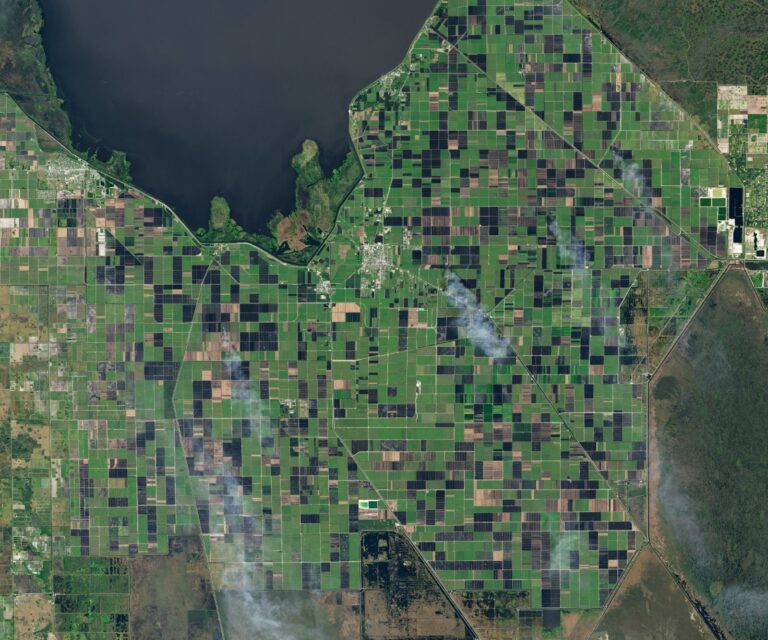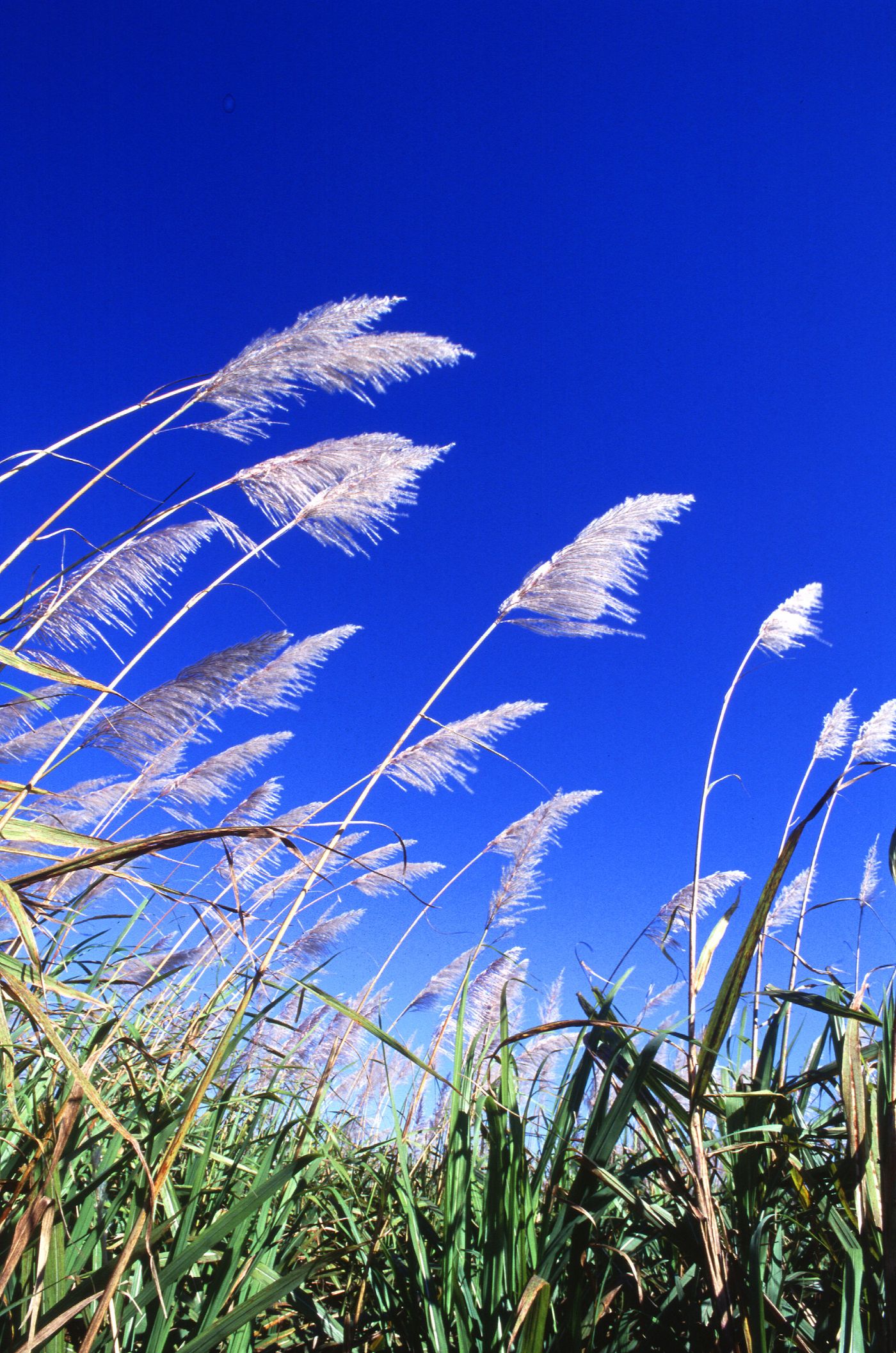
Experimental sugarcane field near Canal Point, Florida. Photo: Scott Bauer, USDA Agricultural Research Service, via Wikimedia Commons. Public domain (U.S. government work).
Quick Answer
Palm Beach County farms sold $1.25 billion of agricultural products in 2022, the most of any Florida county and up 39% from 2017, according to the USDA Census of Agriculture. Crops made up 97% of sales, led by vegetables, sugarcane and nursery products, and net cash farm income rose 142% to $413 million.
How Big Is Agriculture in Palm Beach County?
Most people think of Palm Beach County as a place of oceanfront estates, downtown office towers in West Palm Beach and a growing financial services cluster. The western half of the county tells a different story. Past the suburbs and toward Lake Okeechobee, the county holds one of the largest farm economies in the United States.
The most complete measure comes from the USDA’s National Agricultural Statistics Service, which conducts the Census of Agriculture every five years. The 2022 Census, the most recent available, counted 1,368 farms in Palm Beach County covering 460,575 acres. Those farms sold $1,250,996,000 of agricultural products, a 39% increase from 2017.
Where Does Palm Beach Rank?
The USDA county profile ranks Palm Beach County first in Florida for total market value of agricultural products sold and 33rd among all U.S. counties. On crop sales alone, the county ranks first in the state and 15th in the nation.
Florida’s statewide total market value of agricultural products sold in 2022 was about $10.22 billion, according to the USDA’s state ranking report. Palm Beach County’s $1.25 billion equals about 12.2% of that total, from a single county.
Palm Beach County Agriculture Snapshot (2022)
| Measure | 2022 value | Change since 2017 |
|---|---|---|
| Number of farms | 1,368 | +5% |
| Land in farms | 460,575 acres | -6% |
| Average farm size | 337 acres | -10% |
| Market value of products sold | $1.251 billion | +39% |
| Total farm production expenses | $888.2 million | +18% |
| Net cash farm income | $413.1 million | +142% |
| Farm-related income | $48.6 million | +97% |
| Government payments | $1.7 million | +1,381% |
| Average sales per farm | $914,470 | +32% |
| Average net cash income per farm | $301,959 | +130% |
Source: USDA National Agricultural Statistics Service, 2022 Census of Agriculture County Profile, Palm Beach County.
What Does Palm Beach County Grow?
Crops dominate the county’s farm economy. Of the $1.25 billion in sales, $1.214 billion, or 97%, came from crops. Livestock, poultry and their products accounted for $36.7 million, or 3%.
Top Commodity Groups by Sales (2022)
| Commodity group | Sales | Florida rank | U.S. rank |
|---|---|---|---|
| Vegetables, melons, potatoes, sweet potatoes | $471.1M | 1 | 10 |
| Other crops and hay (includes sugarcane) | $468.4M | 1 | 2 |
| Nursery, greenhouse, floriculture, sod | $248.5M | 3 | 8 |
| Horses, ponies, mules, burros, donkeys | $24.5M | 2 | 8 |
| Grains, oilseeds, dry beans, dry peas | $22.1M | 1 | 1,255 |
| Other animals and animal products | $6.4M | 1 | 32 |
| Fruits, tree nuts, berries | $4.1M | 26 | 271 |
| Cattle and calves | $2.7M | 40 | 2,004 |
| Aquaculture | $2.4M | 15 | 122 |
Source: USDA NASS, 2022 Census of Agriculture County Profile.
Three commodity groups carry the economy. Vegetables, at $471.1 million, made up about 37.7% of total sales. The “other crops and hay” group, which is where the USDA classifies sugarcane, totaled $468.4 million, or about 37.4%, and ranked second among all U.S. counties. Nursery, greenhouse, floriculture and sod products added $248.5 million, about 19.9%.
How Much Land Goes to Sugarcane?
Sugarcane is the county’s largest crop by far when measured by land. The 2022 Census counted 236,659 acres of sugarcane for sugar or seed. That is about 51% of all the land in farms in Palm Beach County.
Top Crops by Acreage (2022)
| Crop | Acres |
|---|---|
| Sugarcane for sugar or seed | 236,659 |
| All vegetables harvested | 82,758 |
| Sweet corn | 36,429 |
| Rice | 19,937 |
| Sod | 13,857 |
Source: USDA NASS, 2022 Census of Agriculture County Profile.
A 2024 South Florida agricultural overview from Florida International University’s Metropolitan Center reports that Palm Beach County produces roughly 75% of Florida’s sugarcane and that sugarcane occupies about one-third of the county’s land area.
Why Do Sweet Corn and Rice Matter?
Sweet corn stands out within the vegetable category, with 36,429 acres, close to half of the county’s harvested vegetable acreage. Rice, with 19,937 acres, helps explain the county’s first-place state ranking in the grains group. The grains group is small in dollar terms, at $22.1 million, but rice and sugarcane together show how the western county’s farmland is organized around large-scale field crops.
Is There a Horse Economy Too?
Yes. Horse sales totaled $24.5 million in 2022, ranking Palm Beach County second in Florida and eighth in the United States in that category. It is the largest livestock line in the county by far, larger than cattle, poultry and aquaculture combined.
Who Farms in Palm Beach County?
The profile shows a farm economy with two very different tiers: a large number of small operations and a smaller group of large commercial farms that generate most of the output.
Farms by Value of Sales
| Annual sales | Farms | Share |
|---|---|---|
| Less than $2,500 | 499 | 36% |
| $2,500 to $9,999 | 208 | 15% |
| $10,000 to $49,999 | 226 | 16% |
| $50,000 to $99,999 | 86 | 6% |
| $100,000 or more | 349 | 26% |
Source: USDA NASS, 2022 Census of Agriculture County Profile (sales classes combined).
Farms by Size
| Size | Farms | Share |
|---|---|---|
| 1 to 9 acres | 839 | 61% |
| 10 to 49 acres | 318 | 23% |
| 50 to 179 acres | 83 | 6% |
| 180 to 499 acres | 49 | 4% |
| 500 to 999 acres | 20 | 1% |
| 1,000 acres or more | 59 | 4% |
Source: USDA NASS, 2022 Census of Agriculture County Profile.
Sixty-one percent of the county’s farms are under 10 acres, and 36% sell less than $2,500 a year. Many of these are likely small nurseries, hobby operations and horse properties. At the other end, just 59 farms of 1,000 acres or more and 349 farms with sales of $100,000 or more account for the bulk of production.
Who Are the Producers?
The Census counted 2,494 producers in Palm Beach County in 2022. Of those, 1,036 were women, about 42%. By age, 211 were under 35, 1,467 were between 35 and 64, and 816 were 65 or older. The Census also counted 935 new and beginning farmers, about 37% of all producers, and 335 producers of Hispanic, Latino or Spanish origin.
Forty-six percent of farms reported hiring farm labor.
How Many Workers Does Agriculture Employ?
FIU’s Metropolitan Center reports 6,290 agricultural workers in Palm Beach County, with a total payroll of $178 million, or an estimated average of $28,320 per worker. The center reports that 23% of those workers are migrant workers.
What Livestock Is Raised in the County?
Livestock is a small slice of Palm Beach County’s farm sales, but it is not absent. FIU’s Metropolitan Center lists the county’s top livestock inventories from the 2022 Census as 14,545 cattle and calves, 7,761 horses, 5,431 layer chickens and 1,151 meat chickens. The horse count lines up with the county’s high national ranking for horse sales, which points to an equine industry that is a business in its own right rather than a sideline.
How Profitable Were Palm Beach County Farms?
The 2022 profile shows a sharp improvement in farm finances compared with 2017.
Sales rose 39% while total production expenses rose 18%, to $888.2 million. Because revenue grew more than twice as fast as costs, net cash farm income jumped 142%, to $413.1 million. Per farm, average net cash income rose 130%, to $301,959.
Expenses still absorb a large share of revenue. In 2022, production expenses equaled about 71% of the market value of products sold. That is a reminder that commercial farming at this scale carries heavy operating costs, even in a strong year.
Government payments were small relative to the size of the farm economy. Although they rose 1,381% from 2017, they totaled $1.7 million in 2022, a tiny figure next to $1.25 billion in sales. Farm-related income, earned from activities beyond the sale of farm products, nearly doubled to $48.6 million.
How Does Palm Beach Compare With the Rest of South Florida?
FIU’s Metropolitan Center groups Miami-Dade, Broward and Palm Beach counties as the South Florida region and counts 4,032 farms on 529,412 acres across the three counties in 2022.
South Florida Agriculture by County (2022)
| County | Market value of products sold | Agricultural workers | Payroll |
|---|---|---|---|
| Palm Beach | $1.25 billion | 6,290 | $178 million |
| Miami-Dade | $1.13 billion | 13,523 | $288 million |
| Broward | $63 million | 1,267 | $29 million |
Sources: USDA NASS (Palm Beach sales); FIU Metropolitan Center, 2024 South Florida Agricultural Overview.
Palm Beach County produces more output than Miami-Dade with fewer than half as many reported workers, which reflects the mechanized, large-acreage nature of sugarcane and field crop production in the western county. Broward’s farm economy is much smaller, and FIU reports nursery stock accounts for 89% of its market value.
Across the three counties, FIU reports 21,080 agricultural workers and a combined payroll of $495.5 million, an estimated average of $23,505 per worker. Palm Beach County’s estimated average of $28,320 is above that regional figure.
How Does This Fit Florida’s Export Economy?
South Florida farm output does not stay local. FIU’s overview cites the Florida Department of Agriculture and Consumer Services’ 2024 agricultural export report, which put Florida’s agricultural exports at $6.6 billion, with a $10 billion economic impact and 83,117 jobs supported by export income. Those are statewide figures, not Palm Beach County numbers, but the county’s position as Florida’s largest farm producer by sales gives it a significant stake in that trade.
What Does This Mean for Palm Beach County Businesses?
Agriculture does not show up much in the daily business conversation in West Palm Beach, but a $1.25 billion farm economy supports a long supply chain. Businesses that sell into the farm sector include:
- Equipment dealers, repair shops and parts suppliers
- Fertilizer, seed and crop protection distributors
- Trucking, packing, cold storage and logistics companies
- Agricultural lenders, insurers, accountants and attorneys
- Labor contractors, housing providers and transportation services
- Landscape and nursery buyers who purchase the county’s $248.5 million in nursery and sod output
The farm economy also connects the Glades communities near Lake Okeechobee to the coastal economy. Wages, supplier payments and capital spending from agriculture circulate through the county even where farms themselves are far from the coast.
When Will New Data Arrive?
The USDA conducts the Census of Agriculture every five years. The 2022 Census is the latest complete county-level picture, and the next one covers 2027. Until then, the 2022 profile remains the most reliable baseline for measuring the size and structure of Palm Beach County agriculture.
Brian’s Take
The headline number is big, but the profit line is what caught my eye. Sales rose 39% from 2017 to 2022 while expenses rose 18%. When revenue grows more than twice as fast as costs, earnings move a lot, and net cash farm income in Palm Beach County jumped 142% to $413 million. That is operating leverage, the same thing I used to look for when I studied companies as an analyst.
What also stands out is concentration. Three commodity groups, vegetables, sugarcane and nursery products, made up roughly 95% of sales, and sugarcane alone takes up about half of all farmland in the county. Concentration can be a strength when a county is this good at something, but it also means the farm economy depends heavily on a few crops.
For West Palm Beach business owners, the takeaway is simple. There is a $1.25 billion industry inside the county line that many coastal companies never sell to. Suppliers, lenders and service firms that learn how agriculture buys have a large customer base close to home.
Frequently Asked Questions
How much do Palm Beach County farms sell?
Palm Beach County farms sold $1.25 billion of agricultural products in 2022, according to the USDA Census of Agriculture, up 39% from 2017.
Is Palm Beach County the top farm county in Florida?
Yes, by total market value of agricultural products sold. The USDA ranks it first in Florida and 33rd in the United States.
How much sugarcane is grown in Palm Beach County?
The 2022 Census counted 236,659 acres of sugarcane, about 51% of the county’s land in farms. FIU reports the county produces about 75% of Florida’s sugarcane.
What are Palm Beach County’s biggest crops by sales?
Vegetables ($471.1 million), the other crops category that includes sugarcane ($468.4 million), and nursery, greenhouse, floriculture and sod ($248.5 million).
How many farms are in Palm Beach County?
The 2022 Census counted 1,368 farms covering 460,575 acres, with an average size of 337 acres.
How many people work in Palm Beach County agriculture?
FIU’s Metropolitan Center reports 6,290 agricultural workers with a total payroll of $178 million.
Sources and Further Reading
- 2022 Census of Agriculture County Profile: Palm Beach County, Florida, USDA National Agricultural Statistics Service
- 2022 Census of Agriculture, Ranking of Market Value of Agricultural Products Sold, Florida, USDA National Agricultural Statistics Service
- 2024 South Florida Agricultural Overview, Florida International University Metropolitan Center
About the Author